
What Is Piano Regulation? Why Your Piano May Not Feel Responsive
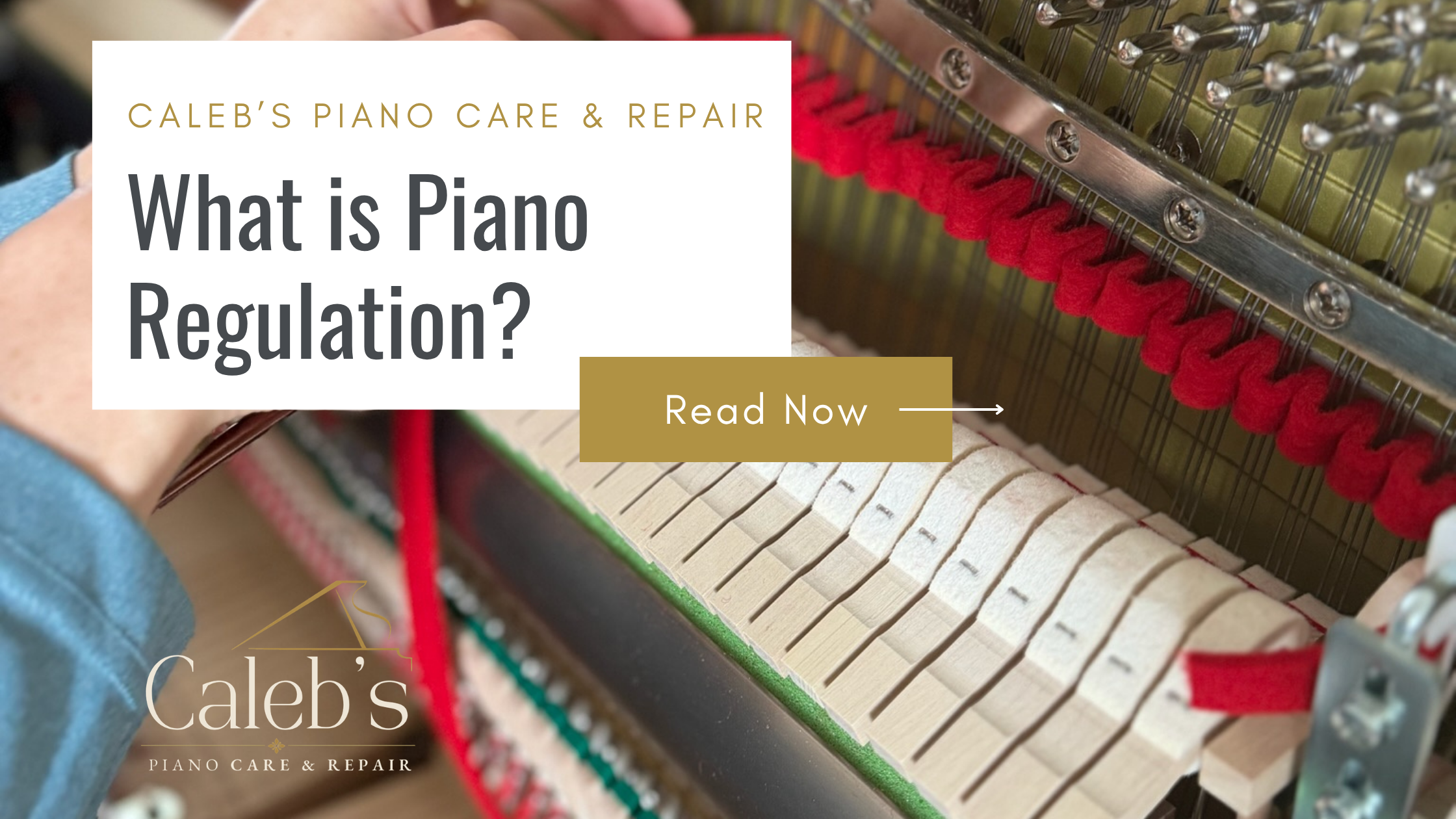
When most people think of piano maintenance, they usually think of piano tuning.
Piano tuning is important, but it only adjusts the pitch of the piano. Regulation is different.
Piano regulation is the process of adjusting the mechanical parts inside the piano so the keys, hammers, dampers, and pedals respond properly. It affects how the piano feels under your fingers, how evenly the keys play, and how much control the musician has from soft to loud.
A piano can be perfectly tuned and still feel difficult to play if the action is out of regulation.
For families, students, and teachers, the simplest way to think about it is this:
Tuning affects how the piano sounds. Regulation affects how the piano plays.
Why Piano Regulation Is Important
Inside an acoustic piano, every key is connected to a series of moving parts. When you press a key, that movement travels through the action mechanism, causing a hammer to hit the strings. The damper also lifts so the note can ring, and then the parts reset so the note is ready to play again.
When everything is adjusted properly, the piano feels responsive, controlled, and consistent.
When the regulation is slightly off, the piano may still make sound, but it may not respond the way it should.
The goal of regulation is to adjust the action to maximize power, control, repetition, and consistency so the pianist can play musically without unnecessary barriers.
Common Signs Your Piano May Need Regulation
A piano may need regulation if it feels uneven, sluggish, or difficult to control.
You may notice:
Some keys feel heavier than others
Some keys feel too light or loose
Notes do not repeat easily
Keys feel slow to return
The piano feels harder to play softly
Some notes sound weak even when pressed firmly
The touch feels uneven across different parts of the piano
Pedals feel loose, squeaky, or unresponsive
The piano feels tiring to play
These issues can be especially frustrating for students or beginners. A beginner may not know how to explain what feels wrong, but they might say the piano feels “hard,” “weird,” or “not like my teacher’s piano.”
For teachers, regulation problems can make it harder for students to develop good technique and musical control.
Piano Tuning vs. Regulation
Tuning and regulation are related, but they are not the same service.
Tuning adjusts the tension of the strings so the piano plays at the correct pitch.
Regulation adjusts the mechanical action so the piano responds properly when the keys and pedals are used.
A piano may need tuning if notes and chords sound unpleasant when played.
A piano may need regulation if it feels uneven, slow, stiff, loose, or difficult to control.
Sometimes a piano needs both. For example, an older upright piano may be out of tune and also have uneven key height, lost motion, sticky action parts, or pedal issues.
What Happens Inside the Piano When You Press a Key?
In an upright piano, pressing a key sets off a carefully timed chain reaction.
The front of the key goes down, the back of the key rises, and the action mechanism moves the hammer toward the string. Just before the hammer reaches the string, it must escape properly so it can strike the string and rebound. The damper lifts so the note can ring, and when the key is released, the parts return to their resting position.
This process all happens very quickly, and it has to happen consistently across the keys.
If one part is too far away, too close, too loose, or too tight, the touch may not feel right. The piano may still play and the note may still sound, but the musician will have less control.
What Is “Lost Motion”?
One common regulation issue in upright pianos is called lost motion.
Lost motion is extra space or delay in the action before the hammer begins to respond. Over time, felt and other action parts compress, and small gaps can develop inside the mechanism.
To the player, this can feel like the key has a little empty movement before anything really happens.
You might notice:
A key feels loose at the top
The note responds late
The action feels disconnected
Soft playing feels harder to control
A technician can adjust this so the key and action respond more directly, while still leaving enough room for the parts to reset properly.
What Is Key Leveling?
Key leveling is another important part of regulation.
Over time, keys may no longer sit at the same height. Some may be slightly higher or lower than the keys around them. This can make the keys feel uneven, even if the piano is still playable.
During regulation, a technician may adjust the height of the keys so the keyboard feels more consistent.
This can make the piano feel smoother and more predictable, especially for students learning scales, chords, and hand position.
For a beginner, uneven keys can make playing feel harder than it needs to be.
What Is Key Dip?
Key dip refers to how far a key travels downward when it is pressed.
If the key does not go down far enough, the action may feel shallow or incomplete. If it travels too far, the piano may feel heavy, deep, or tiring to play.
The exact adjustment is technical, but the result is easy to understand:
Each key should travel a consistent distance and feel controlled under the fingers.
Consistent key dip helps the piano feel more even across the keys and gives the player better control over dynamics and articulation.
What Is Let Off?
Let off is one of the most important adjustments in the piano action.
As the hammer moves toward the string, it needs to release at the right moment. If it releases too early, the player may lose power and control. If it releases too late, the hammer may not rebound properly and the note may not speak cleanly.
To the player, poor let off can feel like:
The key feels mushy
The note does not speak clearly
Repeated notes are difficult
Soft playing feels unreliable
The action feels inconsistent
Let off is one of those adjustments most piano owners never see, but they can definitely feel the result when it is not right.
What Is Aftertouch?
Aftertouch is the small amount of key movement left after the hammer has reached its let-off point.
That sounds technical, but the feeling is simple.
A properly regulated key should have a small, controlled sense of completion at the bottom of the keystroke. It should not feel mushy, blocked, or unfinished.
If there is too much or too little aftertouch, the piano may feel less responsive. It may be harder to play softly, repeat notes, or control the sound.
Aftertouch is one of the reasons regulation is not just about making parts “look right.” It is about how the piano feels under the hands.
Regulation Can Affect Repetition
Repetition means how quickly and reliably a note can be played again.
This matters for playing more advanced music. But, even beginner students need notes to repeat properly when practicing scales, repeated notes, rhythm patterns, and simple songs.
If the action does not reset well, the student may press the key again and get an uneven or delayed response.
Good regulation helps each note reset properly so the piano is ready for the next note.
Pedals May Need Regulation Too
Pedals can also go out of adjustment over time. In an upright piano, the pedals connect to internal levers and rods that operate different parts of the piano.
The sustain pedal should lift the dampers cleanly so the notes can ring. It should not have too much empty movement before it works, but it also should not be so tight that the dampers start lifting too soon.
Pedals may need attention if:
The sustain pedal feels loose
The pedal squeaks
The pedal does not seem to do much
Notes continue ringing when they should stop
The soft pedal feels ineffective
The middle practice pedal does not engage properly
A small pedal adjustment can sometimes make the piano feel much better to use.
Dampers and Ringing Notes
Dampers are the felt parts that stop the strings from ringing when you release the keys.
If the dampers are not working properly, notes may ring longer than they should, stop unevenly, or sound messy when playing.
Damper regulation can involve spacing, lift, and timing. In simpler terms, the dampers need to sit properly against the strings, lift at the right time, and return cleanly when the key or pedal is released.
For families, the main thing to listen for is this:
When you release a key, the sound should stop cleanly unless you are using the sustain pedal.
If some notes keep ringing or stop unevenly, the dampers may need adjustment.
Does Every Piano Need Full Regulation?
No. Not every piano needs a full regulation service.
Some pianos only need small adjustments. Others may need more detailed work if they have not been serviced in many years.
A lightly used family piano may only need minor regulation from time to time. A teacher’s piano, studio piano, or heavily used student piano may need more regular attention because the action parts are used more often.
The age, condition, humidity exposure, and amount of playing all matter.
When Should You Ask About Regulation?
You may want to ask about regulation if:
Your piano is in tune but still feels hard to play
Your child complains that certain keys feel strange
Your teacher says the action feels uneven
Some notes are harder to repeat
The pedals feel loose or unreliable
The keys do not feel level
The piano feels very different from your teacher’s piano
You are preparing for exams, recitals, or regular lessons
If the piano is used regularly for lessons or teaching, regulation can make a noticeable difference in the playing experience.
Can Regulation Help Beginner Students?
Yes. Regulation can be very helpful for beginner students.
A beginner is still learning how much weight to use, how to play evenly, and how to control sound. If the piano responds inconsistently, the student may think they are doing something wrong when the instrument is actually making the task harder.
A well-regulated piano helps students build better habits because the keys respond more predictably.
This does not mean every beginner needs a perfectly regulated piano. But the piano should be playable, consistent, and not fighting the student.
Is Regulation a One-Time Fix?
Regulation is not usually a one-time fix forever.
Piano action parts change gradually with use, age, humidity, and seasonal conditions. Felt compresses, wood moves, screws can loosen, and parts can settle.
A piano that is played regularly may need small adjustments over time.
The goal is not to make the piano perfect forever. The goal is to keep it responsive, consistent, and enjoyable to play.
A Simple Way to Think About Regulation
Piano regulation is about making the piano feel more consistent and responsive.
It can improve:
Key height
Key travel
Touch consistency
Hammer response
Repetition
Pedal function
Damper control
Overall playability
For most piano owners, you do not need to know every technical detail. You only need to know when the piano feels harder to play than it should.
What To Remember
If your piano sounds out of tune, it probably needs a tuning.
If your piano feels uneven, sluggish, loose, or difficult to control, it may need regulation.
Both services are important, but they solve different problems.
For families, students, and teachers, regulation can make the piano more enjoyable and comfortable to play. It can help a beginner student practice with less frustration, help a teacher’s piano respond more reliably, and help an older family piano feel more musical again.
A well-regulated piano should feel balanced, responsive, and predictable from one end of the keys to the other.
Need Help With Piano Regulation?
At Caleb’s Piano Care & Repair, we provide friendly, professional piano tuning, extensive piano care, and regulation services for families, students, teachers, and everyday piano owners throughout Vancouver, Burnaby, Langley, Richmond, and the surrounding Lower Mainland.
If your piano is in tune but still feels unresponsive, regulation may be part of the solution.
Caleb can assess your piano, explain what is happening in clear terms, and recommend practical next steps to help your piano feel more consistent, responsive, and enjoyable to play.

Caleb’s Piano Care & Repair is based in Burnaby BC